

Process Serving in California: A Guide for Litigants
Civil Litigation, Process Serving, California Law
How Process Serving Works in California: A Practical Guide for Attorneys and Self‑Represented Litigants
Proper service of process is the foundation of every California lawsuit. Whether you are a busy attorney managing multiple cases or a self‑represented litigant trying to navigate the courts on your own, understanding how process serving works can mean the difference between a case that moves forward smoothly and one that stalls—or gets dismissed—on a technicality.
Why Service of Process Matters in California
Service of process is the formal way a party is notified that a lawsuit, motion, or other legal proceeding has been filed against them. In California, the rules are governed primarily by the Code of Civil Procedure (CCP), as well as local court rules. If service is defective, the court may lack personal jurisdiction over the defendant, and any judgment you obtain can be vulnerable to challenge or set‑aside motions later on.
For attorneys, that means potential malpractice exposure and avoidable delays. For self‑represented litigants, it can mean starting over, missing deadlines, or having your case dismissed. Understanding the core concepts—who can serve, what must be served, when and how service must happen—is essential for both groups.
“If service is done wrong, everything that comes after it is built on sand.”
— Common wisdom among California civil litigators
Who Can Serve Legal Papers in California?
California distinguishes between registered process servers and others who are legally permitted to serve papers. In most civil cases:
The server must be at least 18 years old and not a party to the action.
A registered process server is required if the person serves more than 10 papers per year for compensation. Registration is handled at the county level and includes bonding and background checks.
Attorneys often rely on professional process serving companies because they understand statutory requirements, maintain proof of attempts, and can testify if service is challenged. Self‑represented litigants can use a friend, relative, or a professional server, but they themselves cannot serve their own papers in most circumstances.
💡 Practice Tip: If service may become contested—such as in high‑conflict family law, eviction, or collection matters—using a registered process server provides added credibility and a clearer evidentiary record.
The Main Types of Service in California
California law recognizes several methods of service, each with specific requirements and consequences for deadlines. The most common are:
1. Personal Service
Personal service means handing the documents directly to the person being served. For an individual, that is the named defendant or respondent. For a business entity, it may be an officer, managing agent, or the designated agent for service of process on file with the California Secretary of State. Personal service is the “gold standard” because it is the hardest to challenge and often required for initial pleadings like a summons and complaint.
2. Substitute Service
When personal service is not reasonably possible despite diligent efforts, substitute service may be allowed. For an individual, this usually means leaving the papers with a competent adult at the person’s home or usual place of business, and then mailing a copy to that address. The server must document attempts at personal service and follow the mailing requirement for substitute service to be valid. Importantly, deadlines—such as time to respond—may run from the date of mailing, not the date of leaving the documents.
3. Service by Mail and Acknowledgment (Notice and Acknowledgment of Receipt)
In many civil cases, California allows service by first‑class mail, accompanied by a Notice and Acknowledgment of Receipt form. The recipient must sign and return the acknowledgment for service to be effective. Attorneys frequently use this option when serving other counsel or cooperative parties. However, if the acknowledgment is not returned, you will have to use another method, and your deadlines could be impacted.
4. Service by Mail (Routine Documents)
Once a party has appeared in the case, most subsequent documents—such as motions, discovery, and notices—may be served by mail, overnight delivery, or electronic service (if agreed or ordered). The method used affects the deadline to respond; for example, service by mail usually adds extra calendar days to the response period. Attorneys and self‑represented litigants alike must carefully calculate these added days under the CCP and relevant rules of court.
5. Alternative or “Substituted” Methods by Court Order
When a party cannot be located despite diligent search, the court may authorize alternative service, such as service by publication in a newspaper or another method reasonably calculated to give notice. This usually requires a motion, a detailed declaration of due diligence, and court approval. It is more time‑consuming and expensive, but sometimes the only viable option.
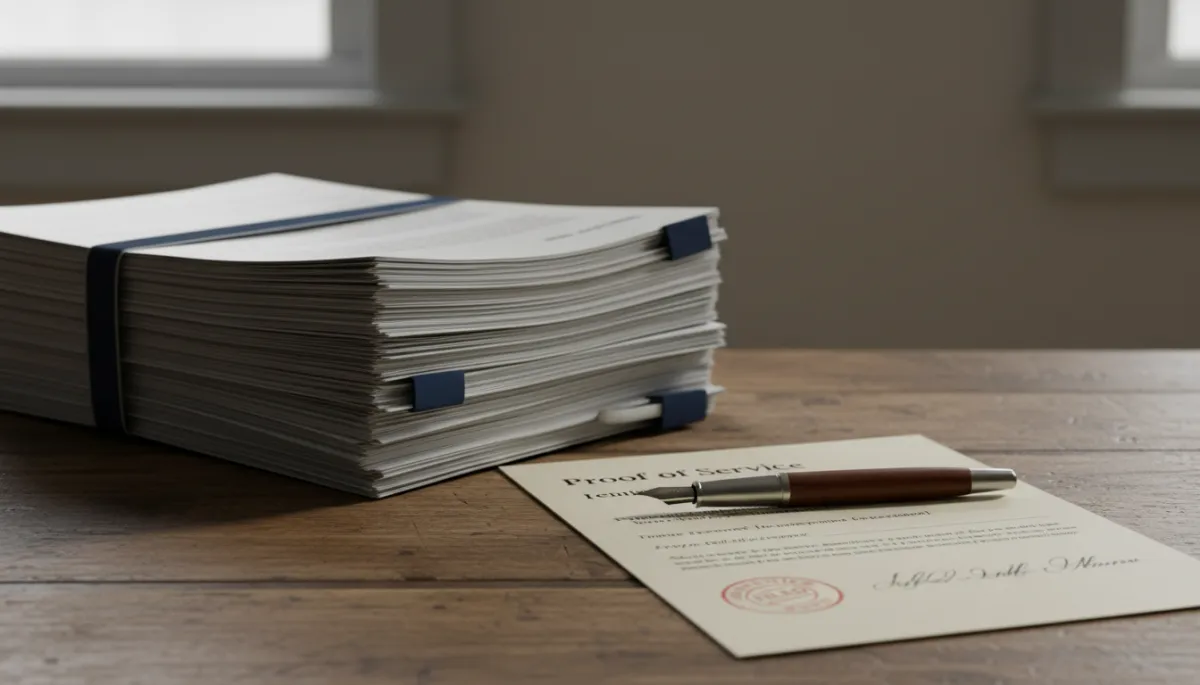
Accurate proofs of service often decide whether a motion is heard or rejected.
The Role of Proof of Service
No matter which method you use, California courts require a proof of service form to be filed or retained, depending on the document. This form identifies:
Who was served and at what address.
Which documents were served.
The date, time, and method of service (personal, mail, substitute, etc.).
The name, address, and signature of the person who performed service.
Courts rely heavily on these forms. Missing or incorrect proofs of service are a common reason for rejected filings, continued hearings, or denied default judgments. For attorneys, a strong relationship with a reliable process server who understands local filing preferences can prevent these headaches. Self‑represented litigants should take extra care to use the correct Judicial Council forms and complete every section accurately.
📌 Key Takeaway: A well‑prepared proof of service is often as important as the document you are serving. Treat it as part of your advocacy, not just paperwork.
Special Considerations for California Attorneys
Attorneys practicing in California have additional strategic and ethical considerations related to process serving. Among them:
Calendar management: Choosing between personal service, mail, or electronic service affects response deadlines and hearing dates. Strategic selection can provide needed preparation time or accelerate relief when urgency is critical.
Risk mitigation: High‑stakes cases benefit from servers who maintain GPS‑stamped logs, photos, and detailed notes to defend against motions to quash or set aside default judgments.
Client communication: Explaining the time and cost of proper service helps manage expectations and avoid pressure to cut corners that might later jeopardize the case.
📌 Key Takeaway for Attorneys: Treat service of process as an early litigation strategy decision, not a clerical afterthought. The method you choose can influence leverage, timing, and even settlement posture.
Guidance for Self‑Represented Litigants in California
Navigating process serving on your own can feel intimidating, but it is manageable if you approach it step by step. Here is a practical roadmap tailored to self‑represented litigants:
Confirm what must be served. For a new case, this typically includes the summons, complaint or petition, and any required local forms. Court self‑help centers and websites often list the exact documents for common case types like divorce, small claims, or unlawful detainer.
Choose an appropriate server. Ask a trusted adult who is not involved in the case, or hire a professional process server. Provide them with clear instructions, addresses, and any useful information about the person being served (work schedule, vehicles, gate codes, and so on).
Track deadlines carefully. California imposes time limits for serving initial papers after filing, and for serving documents before hearings. Mark these on a calendar and give your server enough time to make multiple attempts if necessary.
Use the correct proof of service form. Different forms exist for personal service, service by mail, and other methods. Ensure the server fills out and signs the form, then file it with the court when required or keep it with your records if the rules so provide.
If you are unsure whether service was done correctly, it is usually less costly to redo service correctly than to risk a denied request or a later challenge. Many California courts have self‑help staff or online guides that explain service requirements for common case types in plain language.
💡 Pro Tip: Bring copies of your filed documents, your blank proof of service form, and your calendar to the court’s self‑help center. Staff can often point you to resources that help you complete service correctly the first time.
Common Mistakes and How to Avoid Them
Whether you are an attorney or representing yourself, many problems with process serving stem from the same few errors:
Serving documents too close to a hearing date, leaving insufficient time under the CCP and local rules.
Using mail service when personal service is required for the first appearance of a party.
Failing to mail a copy after substitute service, or not documenting prior attempts at personal service.
Incomplete or inaccurate proofs of service—missing signatures, wrong addresses, or unclear descriptions of the documents served.
⚠️ Warning: Do not alter a proof of service after the server has signed it. If a correction is needed, have the server complete a new, accurate form. Credibility is crucial if service is ever challenged.
Bringing It All Together
Process serving in California is more than just handing someone a stack of papers. It is a structured, rule‑driven procedure that protects due process rights and ensures that every party has notice and an opportunity to be heard. For attorneys, mastering these rules—and partnering with experienced, reliable process servers—reduces risk and keeps cases on track. For self‑represented litigants, understanding the basics and following them carefully can prevent frustrating delays and help your case be decided on the merits, rather than on technical missteps.
Whether you are filing your first petition or managing a busy litigation docket, take a few extra minutes to plan how and when service will occur, confirm that your chosen method complies with California law, and ensure your proofs of service are complete and accurate. Those steps, though simple, can be some of the most powerful tools you have for moving your case forward with confidence.
📌 Final Thought: When in doubt, err on the side of more notice, earlier service, and clearer documentation. Courts rarely fault a party for giving too much notice, but they often penalize parties who cut corners.